Product · home-banking · consumer-digital
Pronto
Chemical Bank's home-banking service, launched in 1983 as one of the earliest widely-marketed consumer-facing online banking offerings in the United States.
Made by Chemical Bank
Launched 1983 · Discontinued 1989
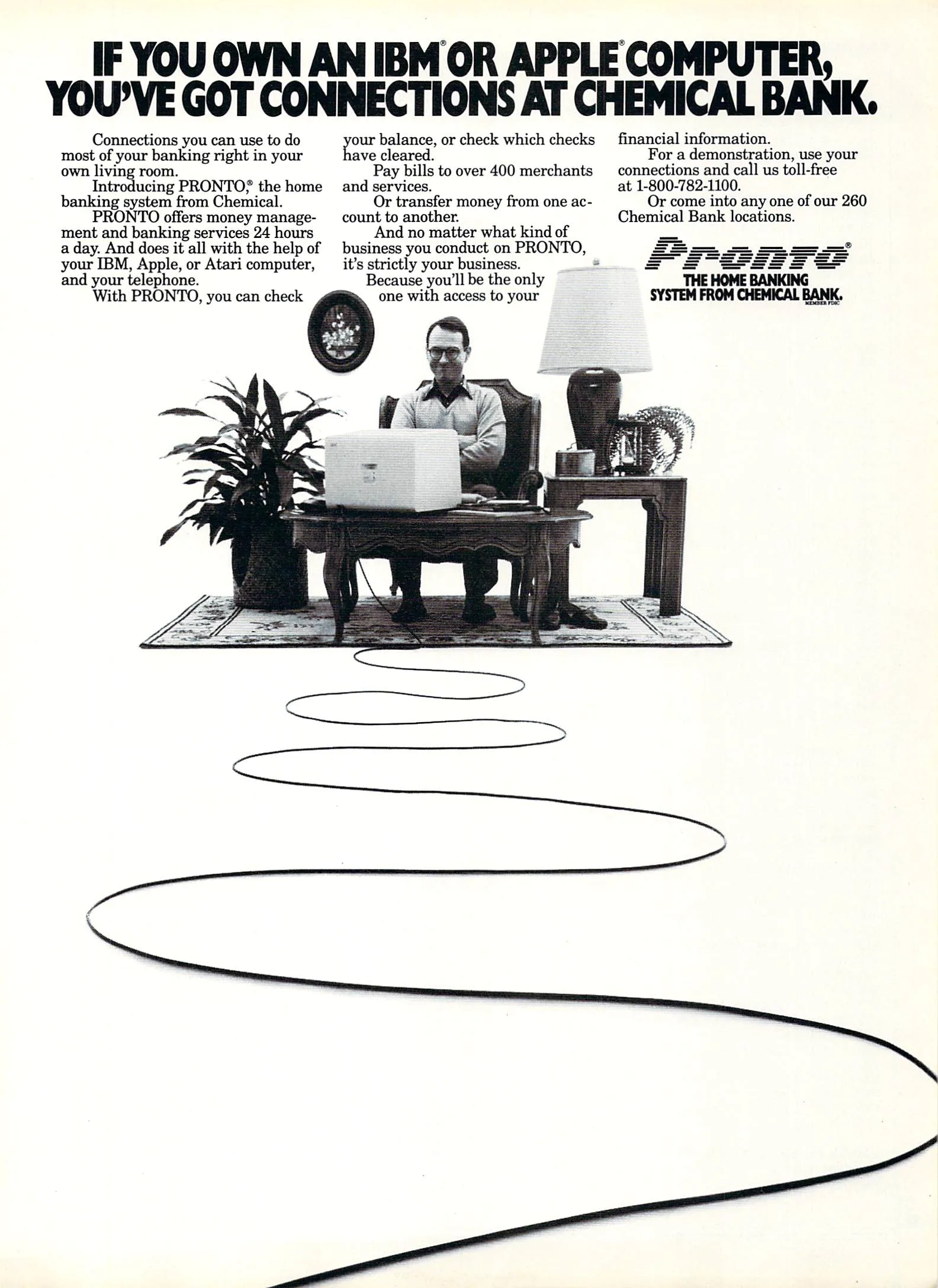
Pronto was Chemical Bank's attempt to sell retail banking as a subscription software product to households that owned personal computers. It ran from a 1982 pilot to a 1989 shutdown. It is frequently described as the first online banking system. It was not, but its scale, its development program (reported at $20 million before launch, and put at around $100 million by the New York Times when the service closed) and its architecture earned it sustained press coverage and a durable place in the industry's memory.
Chemical Bank's Pronto on the Atari 800
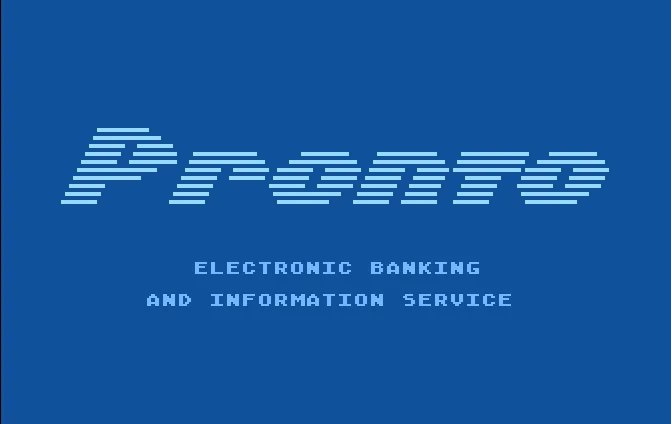
Interact with this software via an emulation of an archival version, thanks to the Internet Archive. The archived software runs, but Pronto was a client for a host that has not answered since 1989. For this reason, the emulation is non-functional.
Pronto let Chemical Bank customers check balances, transfer funds, and pay bills from a home computer over a modem, years before the World Wide Web. Chemical Bank leveraged a retail distribution strategy: a joint advertisement with Bloomingdale's, ComputerLand, and Crazy Eddie's. Chemical read early results as evidence the product could win customers outright rather than merely serve existing ones. Lee Pomeroy was vice president and director of planning for electronic banking at Chemical Bank, the executive responsible for Pronto. Writing in July 1984, he reported that 17% of Pronto users had opened their first Chemical account in order to obtain home banking, and that 51% had opened a new account since subscribing. He characterised it as a powerful account consolidation tool. For Chemical Bank, home banking was both a way to attract tech-savvy customers and maintain consumer relationship control in a rapidly-evolving technology era.
Controlling the packaging and offering the services is necessary to maintaining the customer relationship; otherwise banks will simply appear as a menu item.
— Lee Pomeroy, vice president and director of planning for electronic banking, Chemical Bank. Economic Review, Federal Reserve Bank of Atlanta, July/August 1984
The Videotex Bet, 1985
Pronto's demise was partially attributable to a subsequent dependency on Videotex. Pronto was not itself a videotex system: it ran as software on the subscriber's own IBM, Apple or Atari machine, dialing a bank host over the telephone. Chemical's designers had considered and rejected two-way cable as a delivery channel on the grounds that it was not interactive and reached a smaller market segment than telephones.
The videotex dependency was acquired in 1985, when the product moved under Covidea and was recast as one module within a broader information and shopping service. That bet lost. Outside France, where the telecom carrier distributed Minitel terminals at scale, and the United Kingdom with Prestel, videotex did not gain traction in the U.S. consumer market. The banking services attached to it went down with it.
Adoption Constraints
A subscriber needed a personal computer and a modem in a period when household penetration of both was marginal, and then paid roughly $10 a month to avoid postage costs of twenty cents. Line speeds ran between 300 and 1200 baud. Sessions dropped. There were no graphical interfaces. The service occupied the household telephone line while in use.
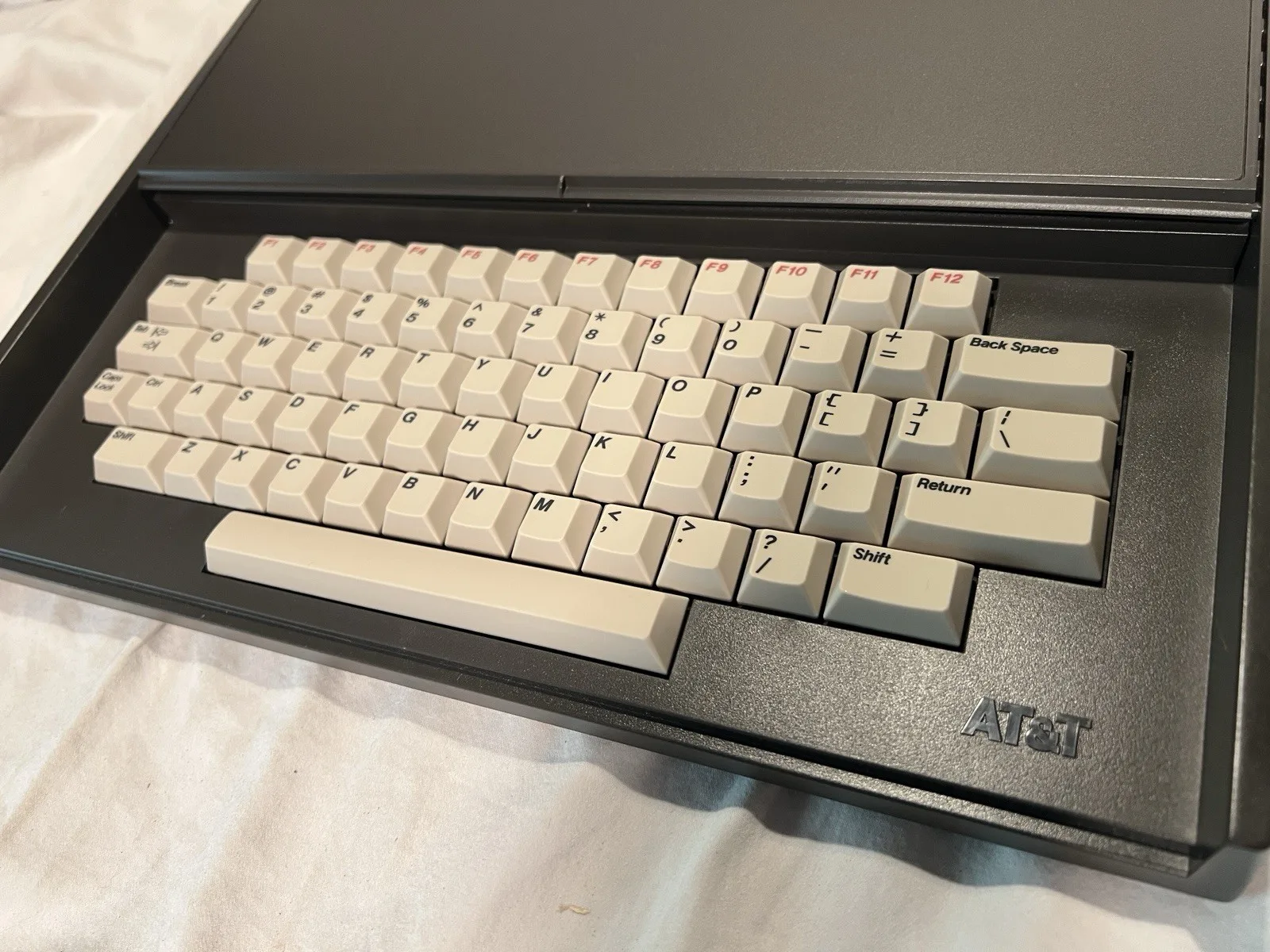
Videotex required special hardware to connect and render graphics on a display. This rare AT&T 1300 Video Transaction Terminal was one such device that included a modem. This was the delivery model Chemical Bank originally rejected.
Innovation Unrewarded
Chemical appears in a January 1996 Microsoft announcement as one of thirty-one institutions offering online banking through Microsoft Money through a dial-up integration. It had become a participant in someone else's platform, seven years after attempting to own one. Sadly, Chemical Bank transitioned from pioneer into participant.
Milestones
-
Chemical Banking Corporation files four trademark applications for PRONTO, covering banking services, software recorded in a memory cartridge, budgeting services, and instruction manuals. These claims establish that Chemical intended executable client-side software from the rom the outset — the architecture it retained, and the thing that distinguished it from the videotex services it was later bundled alongside.
-
Supplementary PRONTO applications filed, adding electronic mail and the delivery of financial information into customers' homes.
-
Pilot begins with 200 Chemical Bank customers in the New York metropolitan area, running on Atari 8-bit computers with acoustic-coupled modems against Tandem hosts at bank headquarters.
-
Crocker National Bank (San Francisco), Worthen Bank (Little Rock), and Florida National Bank (Jacksonville) license Pronto for trials. Chemical Bank operates as a technology vendor to other banks rather than solely as a retail service provider, an early instance of the platform-licensing model later characteristic of the core banking vendor sector.
-
Chemical Bank launches Pronto commercially in New York City, marketed at approximately $10 per month to households owning a telephone, television, and home computer.
-
Approximately 500 New York-area subscribers reported two months into marketing, against a first-year projection of 2,500.
-
Chemical Bank, AT&T, Bank of America, and Time Inc. form Covidea, a joint venture carrying the electronic services business. Pronto moves under this JV. The strategic commitment to videotex and the position that home banking would sell as a module within a broader information and shopping service would seal Pronto's fate.
-
PRONTO BUSINESS BANKER applications filed, covering account inquiry, funds transfer, account balancing, bookkeeping and cost analysis, and electronic mail. Documented pivot toward the small-business segment after the consumer market failed to reach projected scale.
-
Computer Business Review reports that Time Inc. has already withdrawn from Covidea and that AT&T and Chemical Bank are closing the service, after an estimated $50 million in combined development and marketing spend. Attributed to the general commercial failure of videotex in the United States, of which Covidea is one instance among many.
-
Individual subscriber accounts cancelled. Time reports that approximately 25,000 home-banking subscribers were notified, and describes the withdrawal as unsettling the banking industry and raising doubts about the future of home financial services generally.
-
Small-business accounts cancelled. End of service, five years and five months after commercial launch.
Sources
- Andrew Pollack, "Chemical to Offer Banking at Home," New York Times, Sept. 9, 1982, Section D, Page 1. Local archive: assets/primary/pronto/nyt-1982-09-09.txt. — "Chemical Bank, in one of the first announcements of its kind, said yesterday that it would introduce a service that would allow its customers in the New York area to bank at home using personal computers."
- Deborah Burns, "PRONTO: Bank on Your Atari," Antic, Vol. 1 No. 6, February 1983. Local archive: assets/primary/pronto/antic-1983-02.txt. — "Each home computer system serves as a "terminal" for the main program that runs on Tandem Computers at Chemical Bank headquarters."
- James L. Rowe Jr., "American Security Bank Plans to Launch Home-Banking Pilot Program Next Year," Washington Post, Nov. 21, 1983. Local archive: assets/primary/pronto/wapo-1983-11-21.txt. — "The home-banking project will use the Pronto system developed by New York's Chemical Bank."
- Robert A. Bennett, "Banking Goes Into the Home," New York Times, Dec. 7, 1983, Section D, Page 1. Local archive: assets/primary/pronto/nyt-1983-12-07.txt. — "Chemical, with large newspaper advertisements and television commercials, has been the first in the country to bring home banking fully to market, but other banks and companies are well on their way."
- Charline Allen, "The Home Banking Dilemma," DELI, 1984. Local archive: assets/primary/pronto/deli-1984.txt. — "Just two months after Chemical began marketing its Pronto home banking system, for which it spent a reported $20 million in development costs, 500 people in the New York area signed on as users (with 2,500 customers projected in its first year)."
- Reuters, "Chemical to Add Services to Pronto," New York Times, May 16, 1984, Section D, Page 4. Local archive: assets/primary/pronto/nyt-1984-05-16.txt. — "Chemical Bank said it plans to add stock and option trading to its Pronto home banking and information system, enabling its subscribers to handle stock portfolio management through personal computers at home."
- Chemical Bank advertisement, "If You Own an IBM or Apple Computer, You've Got Connections at Chemical Bank," Family Computing, Issue 10 (June 1984), page 91. Full-page print advertisement. Local archive: assets/primary/pronto/Family_Computing_Issue_10_1984_Jun-091.jpg. — "Introducing PRONTO, the home banking system from Chemical. PRONTO offers money management and banking services 24 hours a day. And does it all with the help of your IBM, Apple, or Atari computer, and your telephone."
- Lee Pomeroy, "Home Banking: Chemical Bank's Experience with Home Banking," Economic Review (Federal Reserve Bank of Atlanta), July/August 1984, pp. 36-43. Digitized by FRASER, Federal Reserve Bank of St. Louis. Local archive: assets/primary/pronto/66703_1980-1984.pdf. — "Chemical Bank's experience with home banking began in September 1983 in New York City under the name Pronto. Pronto is a two-way interactive information system, an entirely new customer service. It is not a cable television type system but an interactive one that enables the consumer to ask for and receive specific information or to execute transactions."
- Walter Updegrave, "Personal Finance; Home Banking: Edging in the Door," New York Times, June 23, 1985, Section 3, Page 9. Local archive: assets/primary/pronto/nyt-1985-06-23.txt. — "Chemical estimates that 17,000 households and 4,000 small businesses are using Pronto."
- CBR Staff Writer, "AT&T's Covidea Home Banking System a Commercial Disappointment," Computer Business Review, Dec. 5, 1988. Local archive: assets/primary/pronto/cbr-1988-12-05.txt. — "The latest failure is that of the Covidea home banking system set up by AT&T Co, Chemical Bank and Time Inc in 1985: Time had already pulled out of the venture, and now the two surviving partners are closing it down after an estimated total investment on development and marketing of $50m."
- Leonard Sloane, "Home Banking By Computer Hasn't Made Paper Obsolete," New York Times, Jan. 7, 1989, Consumer's World. Local archive: assets/primary/pronto/nyt-1989-01-07.txt. — "Sales of high-tech home banking systems have been so modest that about three dozen financial institutions have dropped them in recent years. And early last month, Chemical Bank announced that it would soon end its Pronto home computer banking system, which it spent around $100 million to develop."
- Philip Elmer-DeWitt, "Technology: Back to The Velvet-Roped Lines," Time, Jan. 9, 1989. Local archive: assets/primary/pronto/time-1989-01-09.txt. — "The bank has advised an estimated 25,000 home-banking subscribers that their accounts will be canceled, as of Jan. 31 for individuals and Feb. 28 for small businesses. The move has jarred the banking industry and raised doubts about the future of all home financial services."
- "Ten More Leading Financial Institutions Will Offer Online Banking With Microsoft Money; Brings Total to 31," Microsoft press release, Jan. 30, 1996. Chemical Bank is named in the list of participating institutions.